
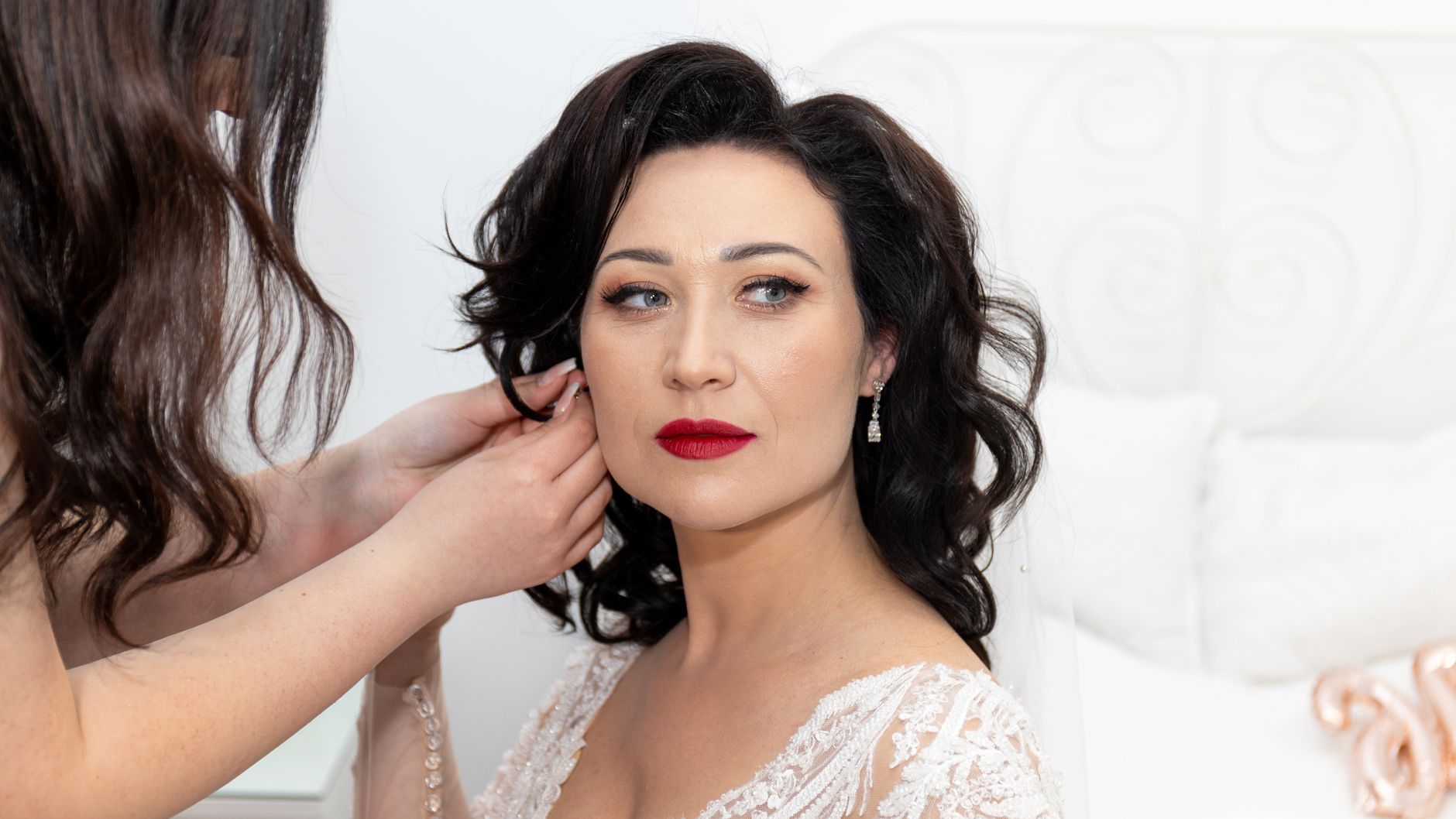
Choosing wedding earrings comes down to balancing the dress, the hairstyle and the look sought for the day, without overloading an outfit that has already been carefully put together. Unlike a ring or a necklace worn daily, this piece of jewellery often gets only one occasion to prove itself, which makes it worth choosing with extra care. This guide covers the criteria that shape the decision, the formats most often worn by brides, the materials to favour and the constraints of a particularly long day.
Which earrings to choose based on the dress and hairstyle
The starting point remains the dress, and more precisely its neckline: an open neckline or one trimmed with lace leaves room for a more noticeable piece, while a closed collar or a dress already rich in detail calls for a more discreet earring so as not to overload the outfit. The hairstyle plays just as decisive a role, since it determines whether the earrings stay visible or end up partly hidden by the hair or the veil.
| Dress and hairstyle | Recommended earrings |
|---|---|
| Open neckline, updo | Drop earrings or medium hoops, clearly visible |
| Closed neckline, dress already detailed (lace, embroidery) | Discreet studs, without layering a necklace |
| Asymmetric or strapless dress | Earrings alone, without a necklace, to avoid overload |
| Loose hair or a covering veil | Bolder designs, since they are partly hidden |
| Updo, bun | Earrings that stand out whenever the profile shows |
Beyond these benchmarks, the look sought for the day stays a personal choice: some brides prefer a single striking piece, others total discretion that lets the dress speak for itself.
Hoops, studs or drops: which to wear on the day
The three main earring families differ mostly in visibility and how well they hold up over time, a particularly important criterion for a day that often stretches over several hours. The guide to hoops, studs or drops covers the differences in weight, diameter and clasp between these three formats, useful benchmarks for a considered purchase ahead of the date.
Drop earrings remain the design most associated with weddings, since their movement follows the hairstyle and catches the light in photos, provided the neckline and hairstyle let them show. Medium hoops suit a more relaxed style, particularly for an outdoor wedding or a bohemian mood. Studs, finally, remain the safe choice for an outfit already rich in detail, or for a bride who prefers not to be distracted by a moving piece of jewellery during the ceremony.
Silver, gold or pearls: which material to choose
The material of the earrings generally matches the rest of the jewellery worn on the wedding day, whether that is the engagement ring, the bracelet or another family heirloom. Silver, often at the 925 fineness, pairs naturally with a white or ivory dress and a classic or understated mood; the guide to sterling silver 925 covers what that term means and what it guarantees about the metal’s composition.
Gold, whether solid gold or gold vermeil, brings a warmer tone, particularly suited to a dress with champagne or golden highlights, or to a deeper skin tone. Pearls, finally, remain a traditional choice for bridal jewellery, valued for their quiet shine and their ability to pair easily with any dress colour without ever competing with it.
Earrings based on the bride’s style
The look sought for the day shapes the choice just as much as the dress itself. A bride with a classic or romantic style often turns to pearls or fine silver drops, discreet and timeless. A bohemian or rustic wedding pairs better with hoops or organic shapes, sometimes paired with a natural stone. A bride seeking a bolder look can instead opt for a statement design, provided no other bulky piece is layered at the neck or in the hair.
For a wedding celebrated in the evening, a shinier design or one set with small stones catches artificial light better than daylight, a useful benchmark when choosing between a matte and a more sparkling design.
Wearing earrings all day: weight and comfort
A wedding rarely lasts less than several hours, between getting ready, the ceremony, the photos and the reception, which makes the weight of the earrings a criterion worth taking seriously. A bulky design, comfortable for a single photo, can become heavy by the end of a full day, particularly on a lobe not used to wearing heavy jewellery.
A reliable clasp also matters: the butterfly back, the most common, stays simple but its small rear piece is easily lost in the rush of the day, while a screw or lever back offers a more secure hold for an eventful day, dancing included. Some brides choose a lighter pair for the ceremony and photos, then a more discreet or lighter version for the evening, a simple way to balance looks and comfort over the course of the day.
Budget and timing the purchase
The budget for a pair of wedding earrings varies widely depending on the material and the level of finish sought, from a few tens of euros for a silver design set with cubic zirconia to several hundred euros for a gold piece set with pearls or fine stones. Deciding on the piece several weeks ahead of the date leaves time to try several designs once the dress has arrived, rather than relying on a photo or a try-on done on a different skin tone.
A full trial, dress, hairstyle and earrings together, remains the most reliable way to confirm a choice before the day, particularly for a bulky design or a material whose look changes with the lighting. Trying the earrings under both natural and artificial light helps anticipate how they will look for an outdoor ceremony as well as for an evening reception, and avoids an unwelcome surprise once the photos are taken.
Frequently asked questions
What earrings should you choose for a wedding?
The choice depends mostly on the dress and the hairstyle: an open neckline and an updo favour drop earrings or hoops, while a closed neckline or loose hair pairs better with discreet studs. The material then follows the tone of the outfit and of the other jewellery worn on the day.
Should wedding earrings match the necklace?
Wearing both at once is not required, and many brides prefer a single strong piece rather than two layered together. With an asymmetric neckline or a dress already covered in lace or embroidery, earrings alone are often enough, without a necklace.
Silver or gold for bridal earrings?
Silver pairs naturally with a white or ivory dress and a classic mood, while gold brings a warmer tone, suited to a golden skin tone or a dress with champagne-coloured highlights. The choice mostly comes down to matching the rest of the jewellery worn.
How heavy should earrings be to last the whole day?
A wedding lasts several hours, often a full day: light earrings, with a butterfly or lever back, stay more comfortable than a heavy design worn continuously. A lighter backup pair for the evening is a popular option for brides who still choose a statement design for the ceremony.