
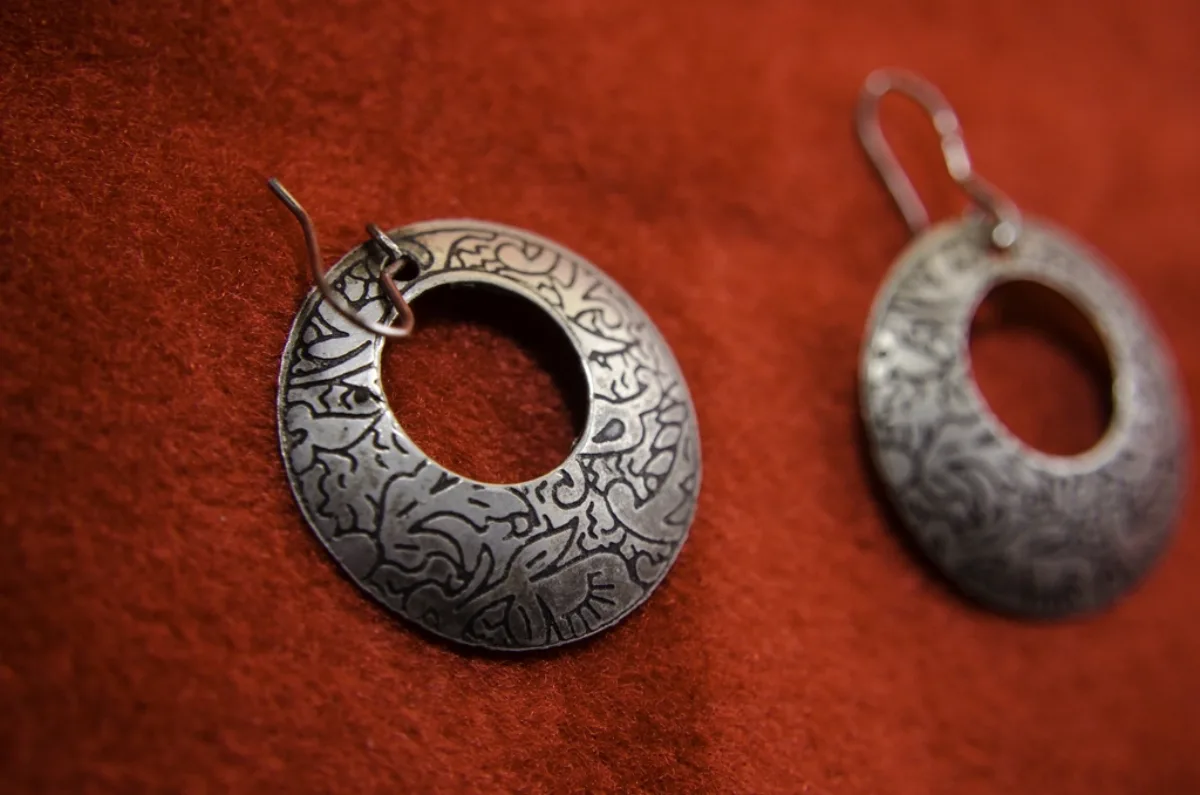
 Photo par Auteur inconnu via Rawpixel (CC CC0 1.0)
In short:
- Silver 925 means 92.5% pure silver, the rest being an alloy meant to harden the metal, most often copper.
- Tarnishing is a normal, reversible reaction, not a sign of fake silver.
- The hallmark is the only physical proof: without a 925 stamp or a guarantee hallmark, nothing confirms the stated fineness.
- For sensitive skin the point of attention is not silver itself but the 7.5% alloy, nickel in particular.
What the number 925 actually means
Pure silver, known as fine silver, is 999 parts per thousand. It is too malleable for a piece worn daily: a stud post would bend, a hoop would lose its shape. The industry therefore alloys it with other metals.
Sterling silver 925 is the standard alloy: 92.5% pure silver, 7.5% other metals. Copper is the most common addition.
Recognising real sterling silver
Three things can be checked before buying:
- The 925 stamp engraved on the post, the clasp or the ring.
- The guarantee hallmark, mandatory in France above a certain weight threshold.
- The stated fineness on the product page, which commits the seller.
Tarnishing is not a defect
Silver reacts with sulphur compounds in the air and in perspiration. The grey or black layer that appears is a surface chemical reaction, not wear of the metal.
What speeds it up:
- perfumes and hairspray sprayed onto the piece,
- chlorinated household products,
- open-air storage rather than a closed pouch,
- heavy perspiration.
A polishing cloth impregnated with anti-tarnish product removes the layer in a few passes. Silver dips work but are harsh on stones and plated parts.
Sensitive skin: look at the alloy, not the fineness
| The 7.5% alloy | Skin tolerance | Note |
|---|---|---|
| Copper | Generally good | Most widespread alloy |
| Nickel | At risk | Capped by REACH |
| Argentium (germanium) | Good | Less prone to tarnishing, more expensive |
A reaction after a few hours of wear, with redness and itching at the contact point, points to contact allergy. A dermatologist settles the question, an article cannot.
Frequently asked questions
What does 925 mean on earrings?
Silver 925 contains 92.5% pure silver and 7.5% other metals. Pure silver is too soft to hold a jewellery shape.
Why do my silver earrings turn black?
Tarnishing from contact with air, perspiration or cosmetics. The layer comes off with a suitable polishing cloth.
Is sterling silver suitable for sensitive skin?
In most cases yes. The point of attention is the 7.5% alloy, nickel in particular, whose release is capped by REACH.