
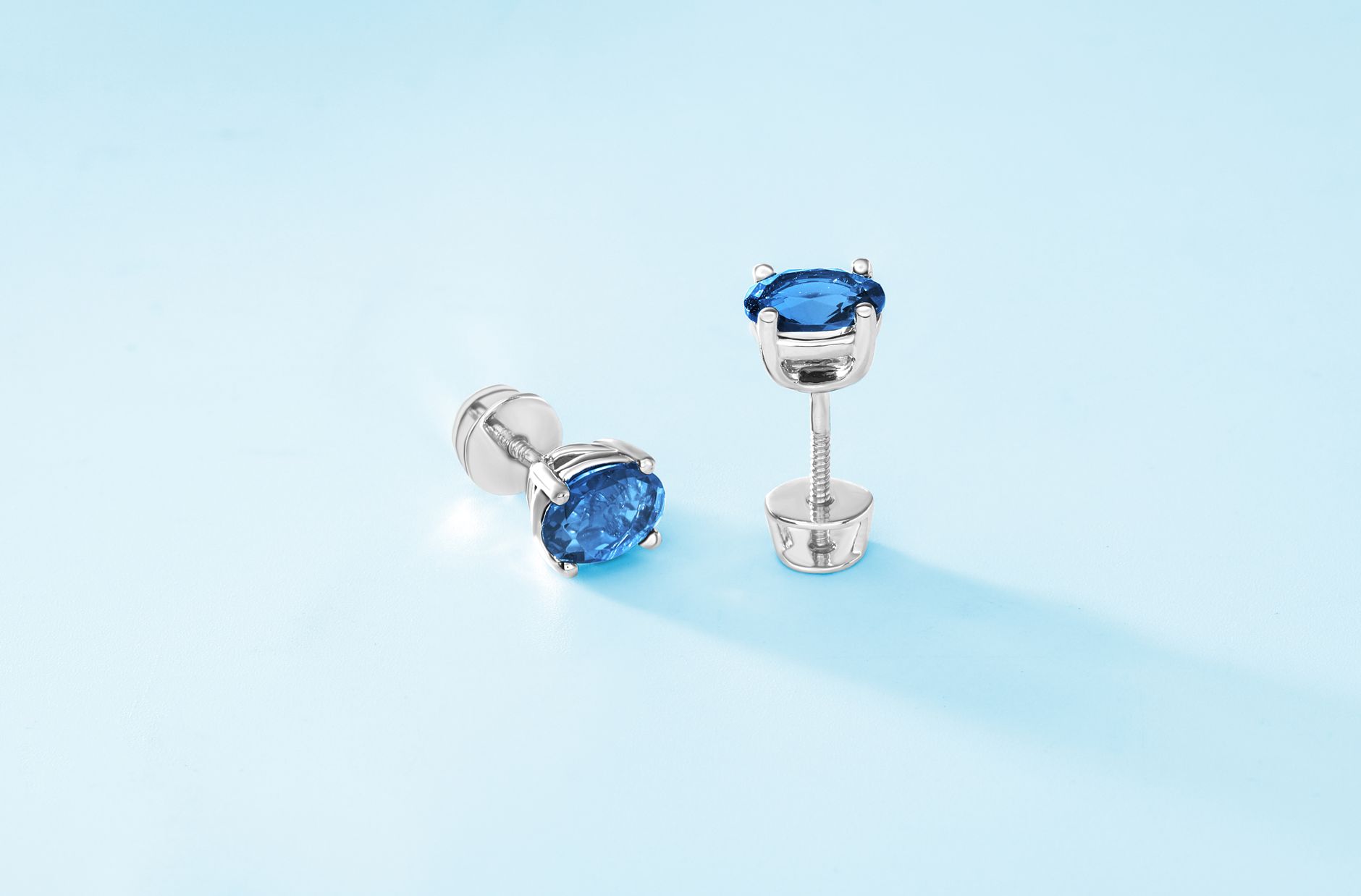
Sapphire is a precious stone prized since antiquity for its intense colour and exceptional hardness, making it one of the most favoured choices for a ring or a piece of jewellery meant to last. Most often associated with deep blue, it actually comes in a wide range of colours and carries a strong symbolism of fidelity and wisdom. This guide explains what sapphire really is, its different colours, its meaning, the criteria for recognising an authentic stone, and how to choose and care for a piece of jewellery set with it.
What is sapphire?
Sapphire belongs to the corundum family, a crystallised aluminium oxide that ranks among the hardest known minerals, rated 9 on the Mohs scale, just behind diamond. This hardness explains why sapphire withstands daily wear very well and suits rings in particular, which are worn and exposed to knocks more than any other piece of jewellery.
Sapphire, a variety of corundum
Corundum, in its pure state, is colourless. Traces of chemical elements such as iron or titanium give it its colour during geological formation. Ruby is in fact a red corundum, coloured by the presence of chromium: sapphire and ruby are therefore two variants of the same mineral, distinguished only by their hue. Every colour of corundum other than red is grouped under the name sapphire.
The colours of sapphire
While blue remains the shade most associated with sapphire in the public mind, the stone actually comes in a much wider range of colours, each with its own market and its own admirers.
| Colour | Distinctive feature |
|---|---|
| Blue | The most sought-after shade, from pale blue to deep midnight blue |
| Pink | Favoured in feminine jewellery, close to pink spinel in appearance |
| Yellow and orange | Often linked to specific sources such as Sri Lanka |
| Green | Rarer in mainstream jewellery |
| Colourless | Sometimes used as a more affordable alternative to diamond |
| Pinkish orange (padparadscha) | A rare variety highly sought after by collectors |
Blue sapphire, the most sought-after colour
Blue sapphire owes its hue to traces of iron and titanium. Its intensity varies greatly, from a pastel, almost grey blue to a very saturated midnight blue, the latter generally being the most valued. The sources of Kashmir, now very rare, and Sri Lanka remain historic references for this colour.
Other colours: pink, yellow, orange and colourless
Beyond blue, pink and yellow sapphire are gaining popularity in contemporary jewellery, notably for rings that aim to stand out from a more classic blue stone. Colourless sapphire, less well known, is sometimes offered as an alternative to diamond for a more modest budget, while keeping a very similar hardness.
The meaning and virtues traditionally associated with sapphire
Sapphire carries an ancient symbolism, tied to its colour and its rarity. Linked to the sky through its blue hue, it has long adorned royal crowns and religious ornaments, earning it a reputation for wisdom and truth. In Western tradition, it has also become a symbol of fidelity, which is why it is among the most chosen stones for an engagement ring, alongside diamond.
Sapphire is also the birthstone traditionally associated with the month of September. In popular beliefs and crystal healing, it is said to promote clarity of mind and serenity, virtues that belong to symbolic belief rather than any established scientific basis.
How to recognise a genuine sapphire
The distinction between a natural sapphire, a heat-treated sapphire and a synthetic sapphire is not always obvious, especially since all three share the same basic chemical composition.
Warning signs to watch for
A colour that is too perfect and uniform, without the slightest visible inclusion even under a loupe, is often a sign of a synthetic or heavily treated stone. Conversely, the presence of natural inclusions, invisible to the naked eye but detectable by a professional, is generally considered a sign of naturalness. A price that is abnormally low relative to the stated size and colour intensity should also prompt caution before any purchase.
The role of the gemmology certificate
For a valuable stone, a certificate issued by a recognised gemmology laboratory remains the only reliable guarantee. This document states the presumed origin of the stone, any heat treatments, and its precise colour and clarity characteristics. It is recommended to always request this certificate before buying a sapphire of significant size, just as one would for a diamond.
Sapphire in jewellery: rings, necklaces, earrings
Sapphire lends itself to every type of jewellery, but it is in rings that it remains most iconic, notably in engagement rings where it is often surrounded by small diamonds. It suits a promise ring just as well, where no particular style is required. For a setting different from the classic centre stone, the thin, adjustable or zirconia ring offers interesting alternatives in terms of style and budget, with sapphire quite able to replace the centre stone on these formats.
In necklaces or earrings, sapphire is often used in smaller stones, sometimes pavé-set, for a more discreet everyday effect. Before ordering a ring set with a sapphire, it remains essential to know the exact size: the method described in the guide to finding your ring size helps avoid the most common mistakes, especially for an online purchase where trying it on is not possible.
How to choose and care for a ring or piece of jewellery set with sapphire
Four main criteria guide the choice of a sapphire: colour and its intensity, clarity, weight expressed in carats, and the quality of the setting that showcases it. A white metal, such as white gold, platinum or rhodium-plated silver, generally enhances the depth of the blue, while a yellow gold setting brings a warmer contrast.
Since sapphire is very hard, it requires little special care: cleaning with lukewarm soapy water and a soft brush is enough in most cases. It is nonetheless advisable to avoid harsh chemical products and strong impacts, which can damage the setting even though the stone itself holds up well. September’s sapphire also makes it a natural gift idea for a birthday falling in that month: the guide on what jewellery to give for a birthday covers other useful criteria for choosing a gift of jewellery according to budget and recipient.
Frequently asked questions
What does sapphire symbolise?
Sapphire is traditionally associated with fidelity, wisdom and truth. Its deep blue colour has long linked it to the sky, which explains its frequent presence in royal regalia and religious ornaments throughout history. This symbolism remains the most cited reason for its use in engagement rings.
Is sapphire always blue?
No, blue is only the most sought-after and best-known colour to the general public. Sapphire also comes in pink, yellow, orange, green, purple and colourless. A rare pinkish-orange variety, called padparadscha sapphire, is particularly sought after by collectors.
Where does the name sapphire come from?
The word sapphire is thought to come from the Greek sappheiros, which originally referred to a blue stone, probably lapis lazuli rather than sapphire in today’s mineralogical sense. The term later settled on the stone known today, a variety of corundum, as gemmology refined the distinctions between blue stones.
How can a natural sapphire be told apart from a synthetic one?
To the naked eye, the distinction is difficult if not impossible, since synthetic sapphire shares the same chemical composition as the natural stone. An examination under a loupe by a professional can reveal characteristic inclusions, present in most natural stones and absent or different in synthetic ones. A certificate from a gemmology laboratory remains the only reliable guarantee before a significant purchase.
What factors influence the price of a sapphire?
The price of a sapphire mainly depends on four criteria: colour and its intensity, clarity, meaning the presence or absence of visible inclusions, weight expressed in carats, and geographic origin, with certain sources such as Kashmir or Sri Lanka traditionally valued more highly. Heat treatments, common and accepted on the market, also affect value compared with an untreated stone.
What virtues are traditionally attributed to sapphire?
In traditional beliefs and crystal healing, sapphire is associated with clarity of mind, serenity and loyalty. These virtues belong to popular and symbolic beliefs, without established scientific basis, and are not a substitute for any medical or professional advice.