
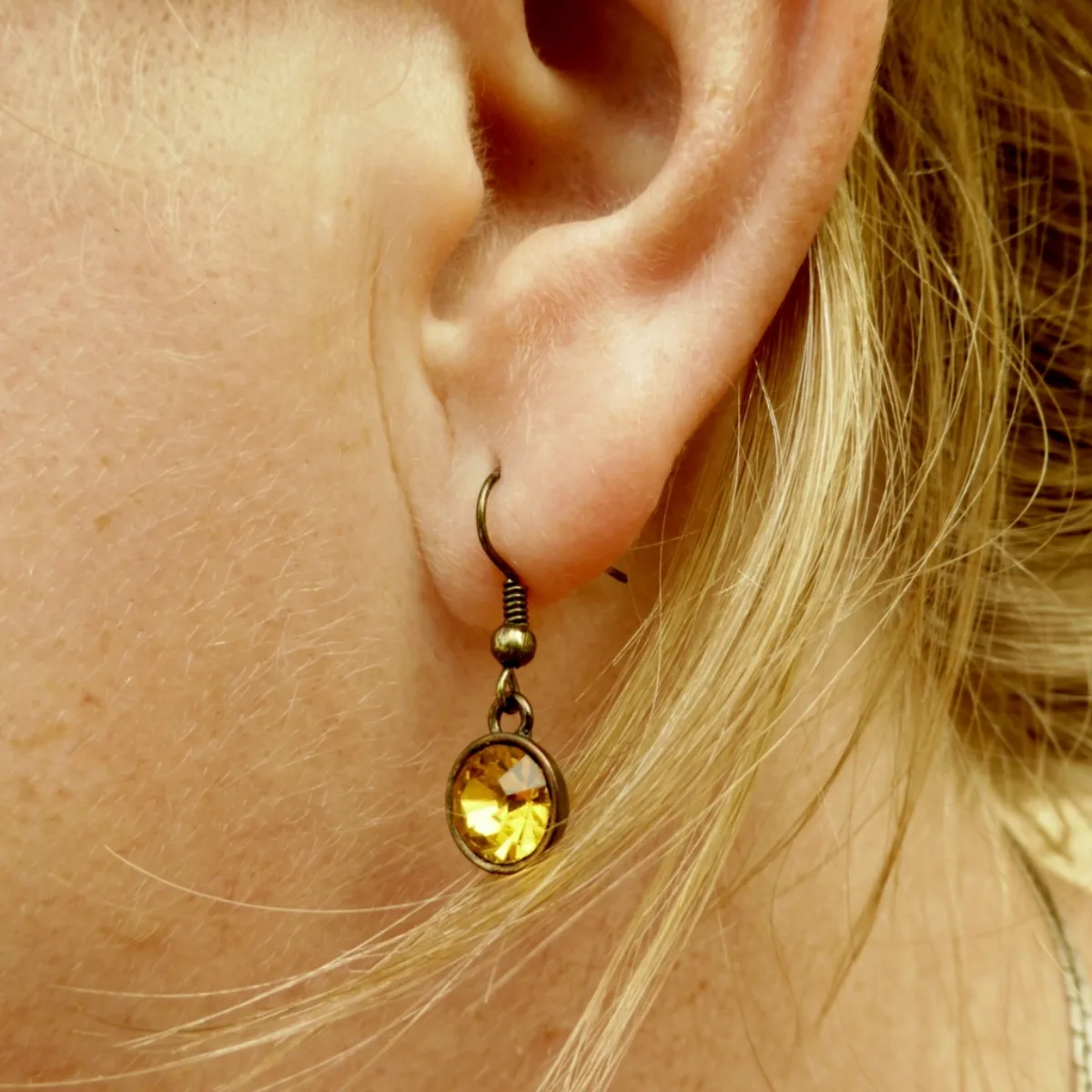
 Photo par Auteur inconnu via Rawpixel (CC CC0 1.0)
In short:
- The butterfly-back stud is the most versatile format: under one gram per ear, no snagging, compatible with a recently healed lobe.
- Diameter changes everything on a hoop: 10 to 15 mm stays discreet, 20 to 30 mm frames the face, above 40 mm it becomes a statement piece.
- Sterling silver 925 contains 92.5% pure silver, the minimum legal fineness to sell a piece as silver in France.
- The main risk with drop designs is not the shape but the cumulative weight over years of daily wear.
Three families, three uses
The earring market splits into three families, and the choice depends less on style than on real-world use.
The stud sits flat on the lobe, held by a post and a butterfly back. It is the lightest and most discreet format. The hoop is a ring that passes through the lobe and closes on itself. The drop suspends a moving element below the lobe, which makes it visible in motion but more exposed to snagging.
What the clasp changes
The clasp determines how securely the piece holds, and often its price:
- Butterfly back: the most common, simple, but the small back piece is easily lost.
- Screw back: more secure, recommended for a stone or a valuable design.
- Click or hinged system: standard on hoops, closes one-handed.
- Leverback: practical for drops, but can still open on a snag.
Diameter, the decisive criterion on a hoop
| Diameter | Look | Use |
|---|---|---|
| 10 to 15 mm | Stays within the lobe, barely visible from the front | Daily wear, office |
| 20 to 30 mm | Extends past the lobe, visible from the front | Everyday and going out |
| 40 mm and above | Statement piece, may touch the shoulder | Occasions |
Weight follows diameter. A thin 12 mm silver hoop often weighs under 2 grams a pair, while a 50 mm design easily exceeds 8 grams.
Materials: read the wording before buying
Sterling silver 925 means 92.5% pure silver alloyed with 7.5% other metals, most often copper. This fineness is the legal minimum in France to sell a piece under the name silver.
On the gold side, French regulation distinguishes gold plating proper, which requires a gold layer of at least 3 microns, from simple gilding or flash plating, far thinner and quicker to wear away.
For sensitive skin, the European REACH regulation caps nickel release from jewellery in prolonged skin contact. Items intended to be inserted into a pierced ear fall under the strictest limit.
Frequently asked questions
Which earrings should you choose when starting out?
A straight-post stud with a butterfly back: under one gram per ear, no snagging, suitable for a recently healed lobe. Small hoops come next, drops once the lobe is well established.
What hoop diameter should you choose?
10 to 15 mm stays discreet, 20 to 30 mm is visible from the front, above 40 mm becomes a statement piece.
Do drop earrings damage the lobe?
The weight and duration of wear matter, not the shape. Alternating with studs and removing them at night limits stretching.