
In short:
- The ear splits into two zones that behave in opposite ways: the lobe, soft and well supplied with blood, and cartilage, rigid and slow to heal.
- The commonly cited range is six to eight weeks for a lobe, against six to twelve months for cartilage.
- Initial placement uses implant-grade material: ASTM F136 titanium, niobium or solid gold of at least 14 carats.
- Not every placement works on every ear: the daith, the rook and the snug depend directly on anatomy.
Placements, zone by zone
On the lobe
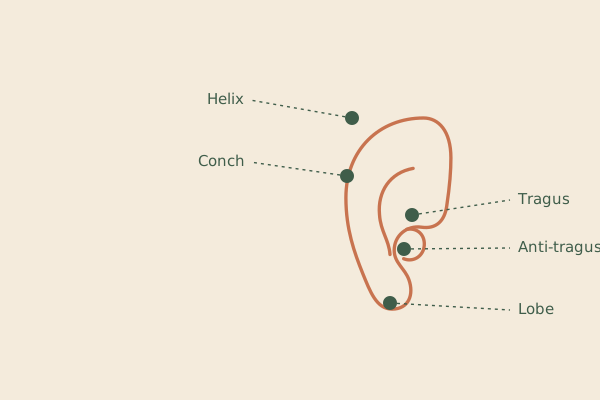
The lobe is the fleshy lower part of the ear. With no cartilage and a good blood supply, it is the most forgiving zone. Second and third holes sit above the first, spaced far enough apart that the jewellery does not touch.
On the cartilage
- Helix: along the upper outer rim, the most common cartilage placement.
- Flat: on the flat surface between the helix and the inner ear.
- Conch: in the central hollow, named after its shell shape.
- Tragus: on the small cartilage flap that shields the ear canal.
- Anti-tragus: on the ridge just above the lobe, facing the tragus.
- Daith: in the inner cartilage fold, above the canal.
- Rook: on the upper fold of the anti-helix.
- Snug: on the inner ridge, one of the most demanding placements.
Healing time: ranges, not rules
| Placement | Tissue | Commonly cited range |
|---|---|---|
| Lobe | Flesh | 6 to 8 weeks |
| Helix, flat | Thin cartilage | 6 to 12 months |
| Conch, tragus | Cartilage | 6 to 12 months |
| Daith, rook, snug | Thick cartilage | 9 to 12 months and beyond |
These figures vary with the person, hygiene, placement quality and the jewellery used. Increasing pain, spreading redness or thick discharge call for medical advice, not an article.
The jewellery matters as much as the placement
For an initial placement, professional piercer associations recommend implant-grade materials: titanium meeting ASTM F136 or ASTM F1295, niobium, or solid gold of at least 14 carats. These materials limit nickel release, whose thresholds are set by the European REACH regulation, with the strictest limit for items inserted into a piercing.
Post length matters too: too short and it compresses the swelling of the first weeks, too long and it catches.
Frequently asked questions
What are the different ear piercings?
The lobe takes the standard piercing and further holes. The cartilage takes the helix, flat, conch, tragus, anti-tragus, daith, rook and snug.
Which ear piercing heals fastest?
The lobe, in a range of six to eight weeks, against six to twelve months for cartilage.
What material should you choose for a fresh piercing?
ASTM F136 or F1295 titanium, niobium, or solid gold of at least 14 carats.