
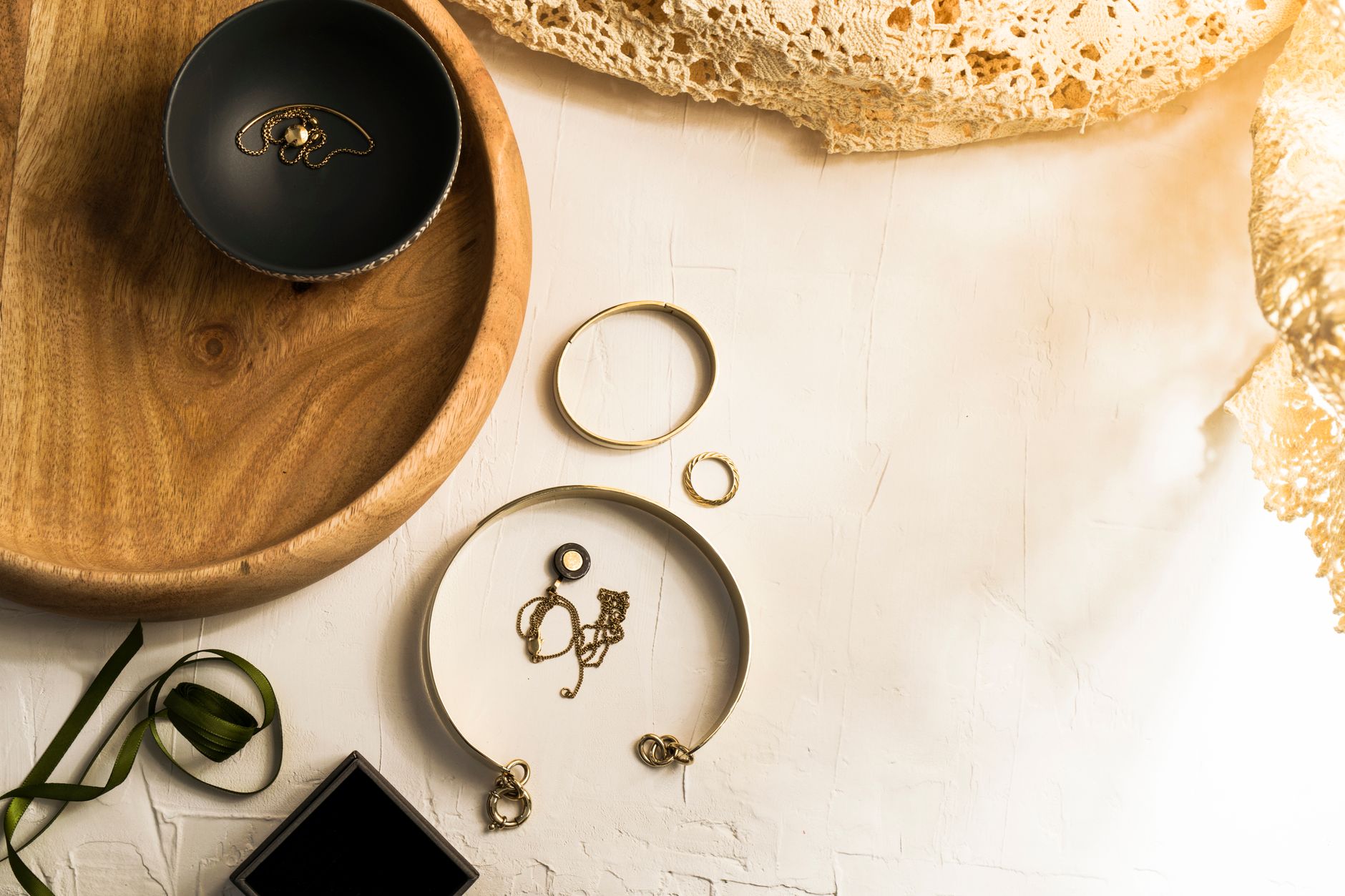
Gold vermeil refers to a piece of jewellery made of solid silver coated with a layer of gold thick enough to be regulated by law, unlike a simple gold-coloured piece. It offers the look of gold for a far more accessible budget, while staying safer over time than classic gold plating, since the metal that reappears as it wears is still silver. This guide explains what vermeil really is, what its French regulation guarantees, how it differs from gold plating and solid gold, how it is made, and how to choose and care for a piece coated with it.
What is gold vermeil? Definition and regulation
Vermeil is a piece of jewellery made of a solid silver base, usually sterling silver 925, coated with a layer of gold of a minimum thickness, applied through electroplating. This double requirement, on the base metal and on the thickness of the gold coating, sets the term vermeil apart from a simple commercial label: in France, it specifically refers to a piece that meets both the silver fineness and a minimum threshold of 3 microns of gold at 750 fineness (18 carats) or above, the same threshold that applies to gold plating on base metal. A piece that fails to meet both criteria cannot legally be sold under the name vermeil.
This regulation protects the buyer: it guarantees that a piece sold as vermeil keeps its promise over time, unlike “gold-coloured” or “flash plated” labels, which guarantee no thickness at all and can fade within a few weeks of daily wear.
Vermeil, gold plating and solid gold: the differences
The four most common market terms differ by their base metal and by the thickness of their gold layer, which greatly changes their price and how well they hold up over time.
| Term | Base metal | Gold layer | What happens as it wears |
|---|---|---|---|
| Vermeil | Solid silver (925) | At least 3 microns | Reveals silver |
| Gold plated | Base metal (brass, copper) | At least 3 microns | Reveals the base metal |
| Gold-coloured, flash plated | Base metal | Not guaranteed, very thin | Fades quickly |
| Solid gold | Gold all the way through | None, no coating | Does not wear through |
Vermeil therefore sits in between: it costs far less than solid gold, while staying more resistant over time than classic gold plating, since the metal that reappears under the coating stays silver, which is gentler on the skin than a base-metal alloy. For a wider choice between silver and gilding on a necklace, the sterling silver or gold plated guide covers all four terms for this type of jewellery.
The vermeil hallmark: how to recognise it
In France, precious metal items are subject to compulsory hallmarking, which guarantees the fineness of the metal used. A genuine vermeil piece therefore carries the silver fineness hallmark (most often the Minerva head mark, for 925 fine silver), sometimes alongside a “vermeil” label engraved by the maker. This hallmark sets vermeil apart from a simply gold-coloured or gold-plated piece on base metal, which carries no silver hallmark at all since it contains none.
Without a visible hallmark, particularly on a fine or imported piece, a professional can check the metal’s fineness through a density test or a surface analysis, which is worth doing before a significant purchase.
History and manufacturing of vermeil
Gilding silver is an old practice, but the French term “vermeil” became established in the 18th century, when Parisian goldsmiths gilded silver using a process based on mercury: a paste of gold and mercury was applied to the piece, then heated to evaporate the mercury and leave only a thin layer of gold bonded to the metal. Toxic for the craftsmen involved, this process gradually disappeared during the 19th century in favour of electroplating, an electrochemical deposition technique still used today.
In practice, the solid silver piece is immersed in a bath containing gold ions, and an electric current gradually deposits a uniform layer of gold over its entire surface, including the recesses of an openwork design. The thickness of this deposit, measured in microns, directly determines how long the piece will keep its gold look before the silver starts to show through again.
Vermeil in jewellery: rings, necklaces, earrings
Vermeil is used across every type of jewellery: rings, necklaces and pendants, earrings, bracelets. On a necklace or pendant worn near the neck, less exposed to friction than a ring, vermeil generally keeps its gold look longer; the necklace length chosen also affects how often it touches skin and clothing, and therefore how fast the coating wears.
Vermeil pairs naturally with fine stones in warm or neutral tones, such as amethyst or lapis lazuli, whose golden flecks or pyrite inclusions echo the gilding. For earrings or pieces worn in prolonged contact with the skin, the sterling silver guide also covers the skin tolerance of solid silver, a benefit vermeil keeps even once its gold layer has worn away.
How to choose and care for a gold vermeil piece
Three main criteria guide the choice of a vermeil piece: the thickness of the gold layer (the thicker it is, the longer the piece keeps its gold look), the fineness of the silver used as a base, and the overall quality of the finish, especially on openwork or engraved parts, which are harder to coat evenly.
The price of gold vermeil
The price of a vermeil piece generally sits between that of plain sterling silver jewellery and that of a solid gold piece, for a far more accessible budget than the latter. It mainly depends on the weight of silver, the thickness of the gold layer and the complexity of the design, as an intricate or openwork piece needs more material and plating time.
Everyday care
Vermeil needs slightly more careful upkeep than plain solid silver jewellery, to preserve its gold layer for as long as possible. It is best removed before showering, swimming, exercising, or applying perfume and creams, whose chemical components speed up the coating’s wear, and stored away from light in a soft pouch, separately from other jewellery to avoid friction. Simple cleaning with lukewarm water and a soft cloth is enough in most cases, without ultrasonic baths or abrasive products, which can damage the thin gold layer.
On the skin side, vermeil’s solid silver base generally makes it a well-tolerated option, including for people sensitive to certain base metals; in case of doubt or a persistent skin reaction, it is best to consult a healthcare professional or a dermatologist rather than rely on a commercial label alone.
Frequently asked questions
What is a gold vermeil piece of jewellery?
A gold vermeil piece is made of solid silver (usually sterling silver 925) coated with a layer of gold at least 3 microns thick, applied through electroplating. This double requirement, on the base metal and on the thickness of the gold coating, sets vermeil apart from a simple gold-coloured or gold-plated piece on a base metal.
What is the difference between solid gold and vermeil?
Solid gold is made of gold all the way through, while vermeil only carries a thin surface layer of it over a silver base. Vermeil therefore costs far less than solid gold, but its gold layer wears off over time and reveals the silver underneath, which never happens with a solid gold piece.
Does gold vermeil hold any value?
Gold vermeil does hold real value, tied to its solid silver base, though far less than solid gold: its resale value mostly depends on the weight of silver it contains, since the thin gold layer weighs very little. A well-made, well cared-for vermeil piece nonetheless stays durable and pleasant to wear every day.
What is the price of gold vermeil?
The price of a gold vermeil piece depends on the weight of silver, the thickness of the gold layer and the complexity of the design, but it always stays well below the price of an equivalent solid gold piece. It generally sits between the price of plain sterling silver jewellery and gold-plated jewellery on base metal, with better durability than the latter.