
In short:
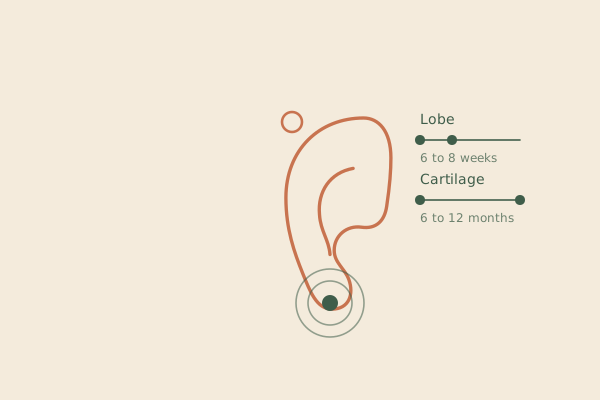
- A lobe commonly heals in six to eight weeks, cartilage in six to twelve months: the tissue pierced, not the person, explains most of the gap.
- A piercing heals on the surface well before it heals inside, which makes an early jewellery change risky.
- The common protocol fits in one line: sterile saline, once or twice a day, without rotating the jewellery.
- Pain that increases after the first week, spreading redness or thick discharge call for medical advice.
Why cartilage is so slow
The lobe is fleshy tissue with a rich blood supply. Blood continuously delivers the cells needed for repair. Cartilage has almost no blood vessels of its own: it is fed by diffusion from neighbouring tissue. The same piercing therefore takes several times longer.
| Placement | Tissue | Commonly cited range |
|---|---|---|
| Lobe | Flesh | 6 to 8 weeks |
| Helix, flat | Thin cartilage | 6 to 12 months |
| Conch, tragus | Cartilage | 6 to 12 months |
| Daith, rook, snug | Thick cartilage | 9 to 12 months and beyond |
These are benchmarks, not guarantees. Hygiene, placement quality, jewellery material and whether you sleep on that ear all shift them.
The three stages
- The first days. Swelling, local warmth, tenderness. A light clear discharge that dries into a crust is expected.
- The following weeks. The channel forms. The area stays fragile even once the pain is gone. This is the stage where people wrongly assume it is over.
- Maturation. The channel thickens and stabilises. Only then does changing the jewellery become safe.
What helps, what harms
Do:
- rinse with sterile saline solution once or twice a day,
- pat dry with a clean gauze, never a bath towel,
- leave the jewellery in place without rotating it,
- change the pillowcase regularly.
Avoid:
- alcohol, hydrogen peroxide and coloured antiseptics, harsh on forming tissue,
- picking off crusts,
- sleeping on the pierced side during the first weeks,
- swimming pools, saunas and hot baths until healing is well advanced.
When to seek advice
Pain that increases after the first week, redness spreading beyond the piercing point, significant warmth, thick or coloured discharge, or fever all warrant prompt medical advice. This article describes common practice, it does not replace the opinion of a healthcare professional or a qualified piercer.
Frequently asked questions
How long does an ear piercing take to heal?
Six to eight weeks for a lobe, six to twelve months for cartilage, longer for thick placements.
When can you change the jewellery in an ear piercing?
Not before full healing, since the surface can look healed while the channel is not.
How do you clean a fresh ear piercing?
Sterile saline solution once or twice a day, without rotating the jewellery.